Why Battousai Is the Ultimate Japanese-Inspired Display Font for Bold Design Projects
In the world of graphic design, typography is not merely about readability; it is about setting a mood, establishing an identity, and capturing attention instantly. When you are working on a project that demands a specific cultural aesthetic—particularly one rooted in traditional Japanese artistry but adapted for modern commercial use—the choice of typeface becomes critical. This is where Battousai enters the conversation as a standout option. It is an incredibly unique, Japanese-inspired display font that brings a distinct visual weight and character to any layout.
Whether you are designing for a high-end sushi bar, a streetwear brand, or a creative poster campaign, the right font can make or break the visual narrative. Battousai offers more than just letters; it offers a style statement. Its bold strokes and intricate details mimic the energy of brushwork while maintaining the precision required for digital and print media. In this article, we will explore why this font has become a favorite among designers looking to inject authenticity and impact into their work.
The Visual Identity of Battousai
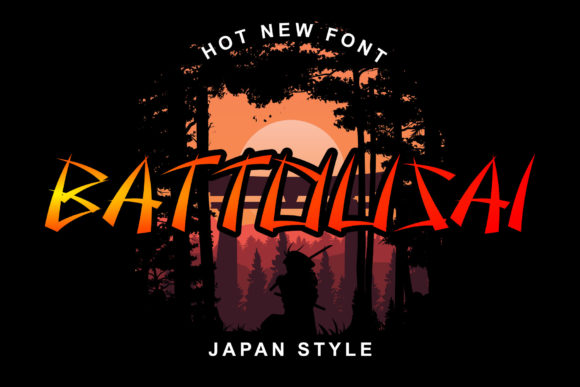
To understand why Battousai works so well, we first need to look at its aesthetic qualities. The font draws heavy inspiration from traditional Japanese calligraphy and woodblock printing techniques, yet it is engineered with the clean lines of modern sans-serif and slab-serif hybrids. This fusion creates a typeface that feels both ancient and contemporary.
The characters in Battousai are thick, confident, and slightly irregular in a way that suggests human handiwork. Unlike rigid, mechanical fonts, Battousai retains a sense of organic movement. The terminals (the ends of strokes) often feature sharp angles or subtle flares, echoing the pressure points of a calligraphy brush. This gives the text a dynamic quality, making it appear as if it has been stamped or painted onto the surface rather than typed out.
This unique visual identity makes it particularly effective for display purposes. It is not designed for long-form body text, where legibility over hundreds of words is key. Instead, it shines when used in headlines, titles, logos, and short impactful phrases. The sheer presence of the letters commands attention, forcing the viewer to pause and engage with the content.
Ideal Applications: From Menus to Posters
One of the most practical aspects of choosing a specialized font like Battousai is knowing where it fits best in your workflow. Because of its strong stylistic flair, it pairs exceptionally well with industries and projects that benefit from a strong cultural or thematic anchor.
Food and Beverage Menus
Perhaps the most popular application for Battousai is in the hospitality sector, specifically within Asian cuisine restaurants. Imagine a menu for a ramen shop, a izakaya, or a modern fusion bistro. Using a standard Arial or Helvetica might convey information clearly, but it lacks soul. Battousai, however, immediately signals to the customer what kind of experience they are about to have.
When used for dish names or section headers, the font adds a layer of authenticity and premium feel. It suggests craftsmanship and tradition. For example, placing the word "RAMEN" in large, bold Battousai letters against a dark background with minimal white space can create a striking contrast that highlights the product. It transforms a simple list of food items into a curated dining invitation.
Event Posters and Flyers
For event promotion, visibility is everything. Whether you are advertising a martial arts tournament, a jazz festival with an urban edge, or a cultural exhibition, Battousai provides the visual punch needed to stand out in a crowded marketplace. Its bold nature ensures that even from a distance, the key information is readable and impactful.
Designers often use Battousai for the main headline of a flyer, allowing secondary information (dates, times, locations) to be handled by a simpler, cleaner sans-serif font. This hierarchy guides the eye effectively: first, the emotion and theme (Battousai), then the logistics (cleaner font). This combination balances artistic expression with functional clarity.
Integrating Battousai into Modern Design Workflows
In today’s digital-first environment, fonts must perform well across various mediums. A common concern designers have with display fonts is whether they will render correctly on screens versus how they look in print. Battousai is versatile enough to handle both scenarios, provided it is used correctly.
- Digital Web Design: When embedding Battousai on a website, consider using it sparingly. It is perfect for hero banners or navigation tabs where space allows for larger sizes. Ensure that the file size does not slow down page load times, as custom display fonts can sometimes be heavier. However, its strong silhouette remains recognizable even at smaller scales on mobile devices.
- Print Production: For physical collateral like business cards, brochures, or posters, Battousai truly excels. The thickness of the strokes holds up well under ink spread, and the intricate details are preserved in high-resolution printing. Designers often experiment with foil stamping or embossing effects on paper featuring Battousai to enhance its tactile appeal.
- Social Media Graphics: With the rise of Instagram and TikTok, static images still play a huge role in marketing. Battousai’s boldness cuts through the noise of social feeds. It works beautifully for quote graphics, announcement posts, and promotional stories where quick engagement is necessary.
Pairing Strategies for Maximum Impact
A frequent mistake when using highly stylized fonts is trying to pair them with other decorative typefaces. This can lead to visual clutter and confusion. The key to using Battousai effectively is balance. Since Battousai is dominant and expressive, it requires a supportive partner that recedes into the background.
Clean Sans-Serifs are the ideal companions. Fonts like Helvetica, Roboto, or Open Sans provide a neutral canvas that allows Battousai to take center stage. The contrast between the rough, textured look of Battousai and the smooth, geometric lines of a modern sans-serif creates a sophisticated tension. It bridges the gap between traditional aesthetics and modern minimalism.
Another effective pairing involves using thin serif fonts for subheadings. The delicate serifs can complement the heavy strokes of Battousai without competing with it. This approach is often seen in luxury branding, where elegance is achieved through contrast rather than uniformity.
Considerations Before You Download
While Battousai is a powerful tool, it is not a one-size-fits-all solution. Before incorporating it into your next project, keep the following considerations in mind:
- Readability Limits: Do not use Battousai for paragraphs of text. The complexity of the letterforms will fatigue the reader’s eyes quickly. Reserve it for headlines, logotypes, and short accents.
- Contextual Appropriateness: While it is "Japanese-inspired," ensure that its use aligns with your brand’s message. Misusing cultural aesthetics can sometimes come across as appropriation rather than appreciation. Use the font respectfully and in contexts where the theme is relevant and authentic.
- Color Contrast: Due to its bold nature, Battousai performs best with high contrast. Light text on a dark background or dark text on a light background works best. Low-contrast combinations (like grey on black) may cause the intricate details of the font to get lost.
Conclusion: Unlocking Creative Potential
Ultimately, typography is a form of visual communication. By choosing Battousai, you are making a deliberate choice to prioritize style, culture, and impact. It is a font that refuses to be ignored, offering designers a way to tell stories that resonate on a deeper level.
Whether you are revamping a restaurant menu, creating a concert poster, or building a brand identity for a new product, Battousai provides the versatility and character needed to elevate your design. Explore its endless possibilities, experiment with different sizes and pairings, and watch as your projects gain a new dimension of depth and authenticity. In a design landscape saturated with generic templates, Battousai stands out as a testament to the power of thoughtful, culturally rich typography.