Evaluating Rebelion: A Practical Guide to Using a Playful Display Font in Design Projects
Selecting the right typeface is rarely just about aesthetics; it is a strategic decision that influences readability, brand perception, and user engagement. Among the vast array of digital fonts available today, Rebelion has emerged as a distinct option for designers seeking a specific emotional resonance. It is not a workhorse body font designed for dense paragraphs or technical documentation. Instead, Rebelion occupies a niche space defined by its fun, simple, and cute visual characteristics. This article provides an objective evaluation of Rebelion, exploring its design DNA, ideal use cases, and how it compares to broader categories of display typography.
Understanding the Visual Identity of Rebelion
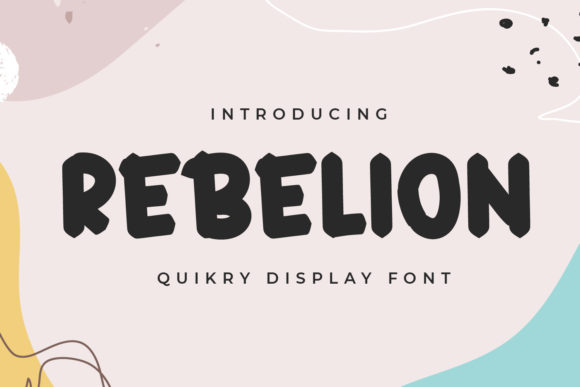
To understand why Rebelion might be the right tool for your project, one must first analyze its structural qualities. The font is categorized as a display font, which means it is intended for large sizes where legibility at small scales is less critical than impact and character. Its defining feature is a "cute" aesthetic, achieved through rounded terminals, consistent stroke weights, and a generally informal geometry. This simplicity is deliberate. By avoiding sharp angles or complex serifs, Rebelion creates an approachable and friendly vibe.
The term "fun" often gets misused in typography marketing, but in the case of Rebelion, it refers to a sense of whimsy without being chaotic. The letters maintain a clear structure, ensuring that even with its playful curves, the text remains readable. This balance between personality and clarity is what makes it distinct from more decorative or novelty fonts, which can sometimes sacrifice readability for style. For a designer, this means Rebelion can convey warmth and humor while still maintaining professional integrity in appropriate contexts.
The Role of Simplicity in Modern Design
In an era where digital interfaces are increasingly cluttered, there is a growing appreciation for clean, simple design elements. Rebelion aligns with this trend by stripping away unnecessary ornamentation. Unlike script fonts that mimic handwriting (which can vary wildly in legibility) or blackletter fonts that evoke historical gravity, Rebelion offers a modern, simplified take on playfulness. This makes it versatile across various media, from web headers to print packaging. Its simplicity allows it to integrate smoothly into designs that prioritize whitespace and minimalism, adding a touch of color and personality without overwhelming the layout.
Ideal Use Cases for Rebelion
Not every font fits every job. Understanding where Rebelion shines helps prevent misuse and ensures the final output achieves the desired effect. Because of its strong personality, it is best reserved for headlines, titles, logos, and short phrases rather than body copy.
- Children’s Media and Education: This is perhaps the most natural fit for Rebelion. Whether designing a cover for a children’s book, a logo for a kids’ clothing brand, or assets for an educational app, the font’s cute appearance resonates immediately with young audiences and their parents. It signals safety, joy, and creativity.
- Gaming and Entertainment: In the realm of casual gaming, Rebelion serves as an excellent choice for UI elements, score displays, or title screens. Games aimed at families or those with a lighthearted tone benefit from the font’s energetic yet non-aggressive look. It complements cartoon-style graphics and vibrant color palettes effectively.
- Creative Branding: Startups or small businesses in the creative industries—such as bakeries, craft stores, pet care services, or toy manufacturers—can use Rebelion to establish a brand voice that feels accessible and friendly. It helps humanize a brand, making it feel less corporate and more community-oriented.
- Social Media Content: For Instagram posts, Pinterest pins, or YouTube thumbnails, grabbing attention quickly is essential. Rebelion’s bold, rounded shapes stand out against busy backgrounds, making it a practical tool for content creators who need to communicate a message instantly.
Comparing Rebelion to Other Typography Approaches
When evaluating Rebelion, it is helpful to compare it against other common typographic styles to see where it fits in the broader landscape. This comparison highlights its unique value proposition and potential limitations.
Rebellion vs. Traditional Serifs and Sans-Serifs
Standard serif fonts (like Times New Roman or Garamond) convey tradition, authority, and seriousness. Standard sans-serifs (like Helvetica or Arial) convey neutrality, modernity, and clarity. Rebelion sits outside these functional norms. While a sans-serif might tell you "this information is reliable," Rebelion tells you "this experience is enjoyable." If your goal is to convey trustworthiness in a financial context, Rebelion would be a poor choice. However, if you are designing a flyer for a local pet adoption event, a standard sans-serif might feel too cold, whereas Rebelion adds the necessary emotional warmth.
Rebellion vs. Decorative and Novelty Fonts
There is a category of fonts that are purely decorative, such as those mimicking graffiti, neon signs, or handwritten scrawls. These fonts often have irregular spacing, varying stroke widths, and complex details. Rebelion differs significantly here. While it is playful, it is highly regular and geometric. This regularity makes it easier to pair with other fonts and simpler to read at a glance. Novelty fonts can sometimes feel dated or hard to parse; Rebelion’s clean execution gives it a more timeless quality within its specific niche.
Rebellion vs. Handwritten Scripts
Handwritten fonts are another popular way to add a personal touch. However, they can be difficult to read, especially in all-caps or when used for longer texts. Rebelion offers a similar "human" feel but with the consistency of a machine-made typeface. This makes it more scalable and reliable for different applications. You can use Rebelion in smaller sizes where a script might become illegible, providing flexibility that pure handwritten fonts lack.
Tradeoffs and Limitations
No single font is perfect, and Rebelion comes with inherent tradeoffs that designers must consider. The primary limitation is its narrow applicability. Due to its strong stylistic identity, it cannot be used universally. Attempting to use Rebelion for long-form text will result in reader fatigue because the eye struggles to track the repetitive, rounded shapes over extended periods. It lacks the subtle variations found in high-end editorial fonts that aid reading flow.
Additionally, the "cute" aesthetic may not suit all brands. For companies in sectors like law, finance, healthcare, or luxury goods, Rebelion could undermine perceived professionalism. It might make a serious topic appear trivial or untrustworthy. Therefore, the decision to use Rebelion requires a careful assessment of brand voice. If the brand is conservative or authoritative, this font will likely clash with the intended message.
Decision Factors: When to Choose Rebelion
Choosing Rebelion should be driven by specific project goals. Consider the following checklist before incorporating it into your design workflow:
- Is the audience young or family-oriented? If yes, Rebelion’s appeal is high.
- Is the medium visual-heavy? Fonts like Rebelion perform best when supported by illustrations or photos, not in isolation.
- Is brevity key? Since it is a display font, ensure your text is short. Headlines, buttons, and labels are ideal; sentences are not.
- Does the brand allow for whimsy? Ensure the overall brand strategy permits a lighthearted tone.
If the answer to these questions is affirmative, Rebelion is likely a strong candidate. It offers a low-risk way to inject personality into a design without requiring complex custom lettering. Its simplicity also means it pairs well with neutral backgrounds and complementary colors, allowing the font itself to be the focal point.
Practical Tips for Implementation
To get the most out of Rebelion, consider how you handle kerning and pairing. Because the letters are round and close together, tight kerning can cause them to merge visually, reducing legibility. Allow slightly more breathing room between characters than you might with a standard sans-serif. When pairing Rebelion with other fonts, choose a neutral companion. A clean, simple sans-serif works well for subheadings or body text, creating a contrast that highlights Rebelion’s personality without competing with it.
Furthermore, pay attention to color. Rebelion’s cuteness is amplified by bright, pastel, or vibrant colors. Using it in stark black and white can make it look somewhat stark or unfinished. Experimenting with color gradients or soft hues can enhance the font’s inherent charm and make the design feel more cohesive.
Conclusion
Rebelion is a specialized tool in the designer’s arsenal. It is not a general-purpose font, nor does it aim to be. Its strength lies in its ability to communicate fun, simplicity, and cuteness with clarity and consistency. By understanding its distinct visual language and comparing it to alternatives like traditional sans-serifs or decorative scripts, designers can make informed decisions about when to deploy it. For projects targeting children, casual entertainment, or brands seeking a friendly face, Rebelion offers a compelling solution that balances aesthetic appeal with functional readability. As with any typographic choice, success depends on alignment with the broader design strategy and audience expectations.